

The Illuminati: who are they?
The term "Illuminati" has become part of global culture so as to inspire not only historical essays but also films, videogames, cartoons and, in the collective mentality, it has inevitably invoked the secret society par excellence which, occultly, strives to have total control of the planet through the establishment of a new world order, and was made famous by the novels of Dan Brown and Robert Anton Wilson.
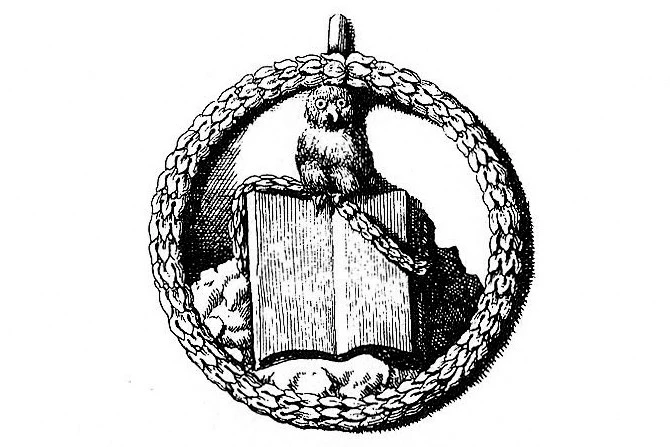
Also known as the Illuminati of Bavaria or more precisely the Order of the Illuminati, they were a secret society born in Bavaria in the eighteenth century and established by Johann Adam Weishaupt (1748–1830) as an alternative to masonry but assuming a similar structure: although the current existence of this society has been in doubt, it is often mentioned in the context of conspiracy theories.
Literally the word, in use since the fifteenth century, designated a group of people who exceptionally defined themselves as "revealed" or better "englightened" by a light directly transmitted from a higher source or due to a privileged condition of human intelligence and its degree of understanding.
The origins of this "movement" can be found in the Alumbrados in Spain, in the Illuminés in France and in the Rosicrucians in Germany.
The Illuminati: brief history and origins
Spanish historian Marcelino Menéndez y Pelayo first finds the name about 1492 (in the form "Aluminados", 1498) but traces them back to a gnostic origin and thinks their views were promoted in Spain through influences from Italy.
One of their earliest leaders—indeed, some scholars style her as a “pre-Alumbrado”—was María de Santo Domingo, who came to be known as La Beata de Piedrahita ("the holy woman of Piedrahíta"): she joined the Dominican order as a teenager and soon gained the reputation of prophet and mystic able to converse directly with Jesus Christ and the Virgin Mary.
Even King Ferdinand of Aragon who summoned her at his court at Burgos, became convinced that her visions were autenthic.
The Dominicans suspected that she was inspired by the Devil rather than God, appealed to Pope Julius II to institute a series of trials against her under the umbrella of the Inquisition.
Her patrons Ferdinand, Francisco Cardenal Jiménez de Cisneros and the Duke of Alba ensured that no action was taken against her so she was cleared of all wrongdoing in 1510.
Saint Ignatius of Loyola, while studying at Salamanca (1527), was accused of sympathizing with the Alumbrados and brought before an ecclesiastical court but he escaped with an admonition only.
Others were not so fortunate because from 1529 and for about a century, rreater rigours followed, the Alumbrados afforded many victims to the Inquisition, especially at Córdoba.
From Seville the movement appears to have reached France in 1623, under the name of "Illuminés".
It attained some prominence in Picardy when joined by Pierre Guérin, curé of Saint-Georges de Roye, whose followers, known as Guerinets, were suppressed in 1635.
Another body of Illuminés surfaced in the south of France in 1722 and appears to have lingered till 1794, having affinities with those known contemporaneously as “French Prophets,” an offshoot of the Protestant militant Camisards.
The Illuminati and The Rosicrucians
The Rosicrucians, on the other hand, belong to a different branch: their origin is estimated at 1422 but reached notoriety only in 1537. Their teachings combined something of Egyptian hermeticism, Christian Gnosticism, Jewish Kabbalah, alchemy and a variety of other occult beliefs and practices. The oldest existing writing that mentions the Rosicrucian order was the "Fama Fraternitatis", published for the first time in 1614, but probably circulated in a previously handwritten form. It tells the journey of the famous founder of the movement, Christian Rosenkreuz, to Damascus, Damcar (a legendary hidden city in Arabia), Egypt, and Fès, where he was well received and made part of the secret knowledge.
Finally he returned to Germany, where he chose three disciples to whom to transmit this wisdom, thus establishing order.
According to one of the six articles of the agreement that the brotherhood adopted, it was to remain secret for 100 years.
At the end of 120 years the secret burial place and the perfectly preserved body of the founder were discovered by one of the members of the order at the time, along with some documents and symbols held in high esteem by Rosicrucians.
The sacred vault was re-covered, the members of the order dispersed, and the location of the vault was lost to history.
The document concludes with the call for joining the brotherhood, reserved for a selected few.
German alchemist Michael Maier, British physician Robert Fludd and British philosopher and statesman Sir Francis Bacon are some of the names associated with the order.
"The Illuminati Order was preceded in the 1500's in Spain by the 'Alumbrados', a Christian heresy started by crypto Jews called 'Marranos'.
The founder of the Jesuit Order, Ignatius of Loyola, was a Marrano / Alumbrado.
Thus when people today argue whether it is the Jesuits or Zionists or Illuminati who are responsible for our troubles, they are really talking about the same beast."-Henry Makow
Resources related to The Illuminati: origins, ancestors and precursors
- ENCYCLOPAEDIA BRITANNICA
- enacademic
- WIKIPEDIA
Article image by Hawkeye
Search in the archive:
alumbrados
christian rosenkreutz
dan brown
enlightened
fama fraternitatis
francis bacon
global elite
ignatius de loyola
illuminati
illuminati of bavaria
jesuits
kabbalah
masonry
new world order
nwo
order of the illuminati
rosicrucianism
rosicrucians
secret society